|

Dublin, capital
of the Republic of Ireland, is a historical and
contemporary hub of education, arts, education and
industry. It is on Ireland's east coast at the
mouth of the River Liffey. The Ha'penny Bridge is a
picturesque pedestrian bridge across the Liffey
linking the Northside and the Southside of Dublin.
|
|

Grafton
Street, a pedestrian shopping street which runs from Trinity
College to St. Stephen's Green, is considered Dublin's High
Street with a wealth of unique shops, galleries and
restaurants.
|

Both
Grafton Street and its environs and the Temple Bar area are
places of high density for pubs, bars and restaurants
featuring innovative menus and live music.
|
|

The Medieval Quarter
dates to the time of the Viking and Norman invasions of
Ireland and includes
significant buildings such as Christ Church Cathedral,
Dublin Castle, St. Patrick's Cathedral, and old city walls,
gates and towers.
|

One of four universities
in Dublin, the University of Dublin dates to the 16th
Century. Its constituent college, Trinity College is reknown
for its ancient library which houses the Book of Kells,
an illuminated medieval manuscript of the gospels.
|
|

The Guinness Storehouse
is a popular tourist attraction that offers tours, city
views and dining experiences related to the production of
Guinness beer.
|

Dublin's main
thoroughfare, O'Connell Street and its iconic monument
celebrate Daniel O'Connell, a revered Irish nationalist
leader. (The hat has been added by the graduating class of
Trinity College.)
|
|

Dublin is known for its
Georgian architecture, especially the elegant doors and fan
windows on the buildings around Merrion and Fitzwilliam
Squares.
|

The Garden of
Remembrance is a memorial to the freedom fighters of various
uprisings "who gave their lives in the cause of Irish
freedom."
|
|

Merrion Square is a
public garden around which most of Dublin's Georgian
buildings are situated. On its fences artists display their
works.
|

St. Stephen's Green is
the largest of Dublin's Georgian parks encompassing an open
heath, bandstand, playground, historic arches and memorial
statues.
|
|

In St. Stephen's Green
the Famine statue is one of approximately 100 that
commemorates the loss of millions of Irish during the potato
famine of the 1840s.
|

The Dublin Municipal
Gallery has an important collection of art by
contemporary Irish artists which highlights Irish culture.
|

Numerous street murals
and installations throughout the city, especially in Temple
Bar and Drury Lane attest to the vibrant artistic spirit.
|
|

Located
in the heart of Georgian Dublin, the National Gallery
of Ireland houses a vast collection of Irish and European
art.
|

The
National Museum of Ireland had displays about Irish natural
history, archeology and decorative arts including
fascinating treasures and mummified bodies retrieved from
the bogs.
|
|
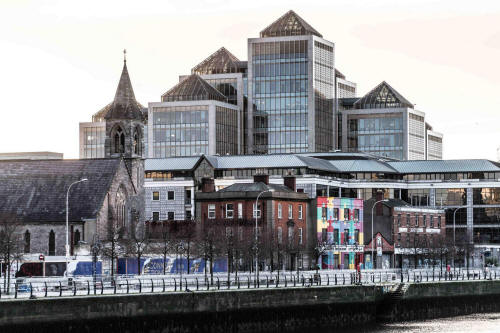
The Dublin Docklands
is the modern redeveloped area of the south bank of the
Liffey. It houses technology and commercial offices such as
the headquarters of the Bank of Ulster.
|

A lot of public art
relates to the sectarian tensions of the 20th century and
the uprisings leading to the Irish War of Independence.
|